Voort · Hendrieken · Borgloon · Haspengouw
The location
A castle estate among fruit trees, a mill brook and sunken lanes. The burning aircraft struck the roof of Tornaco castle and buried itself in the ground just in front of the façade.
Tornaco castle
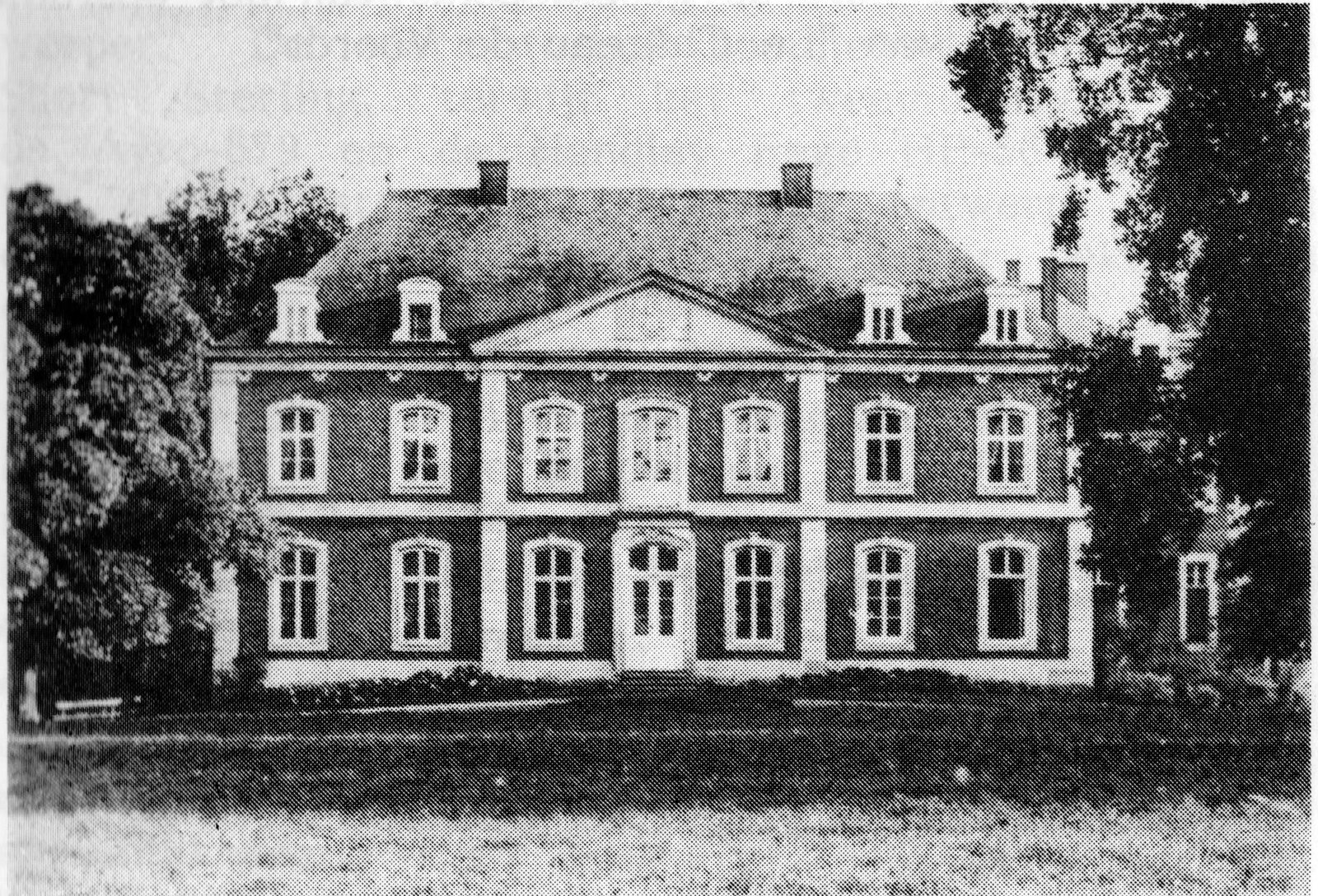
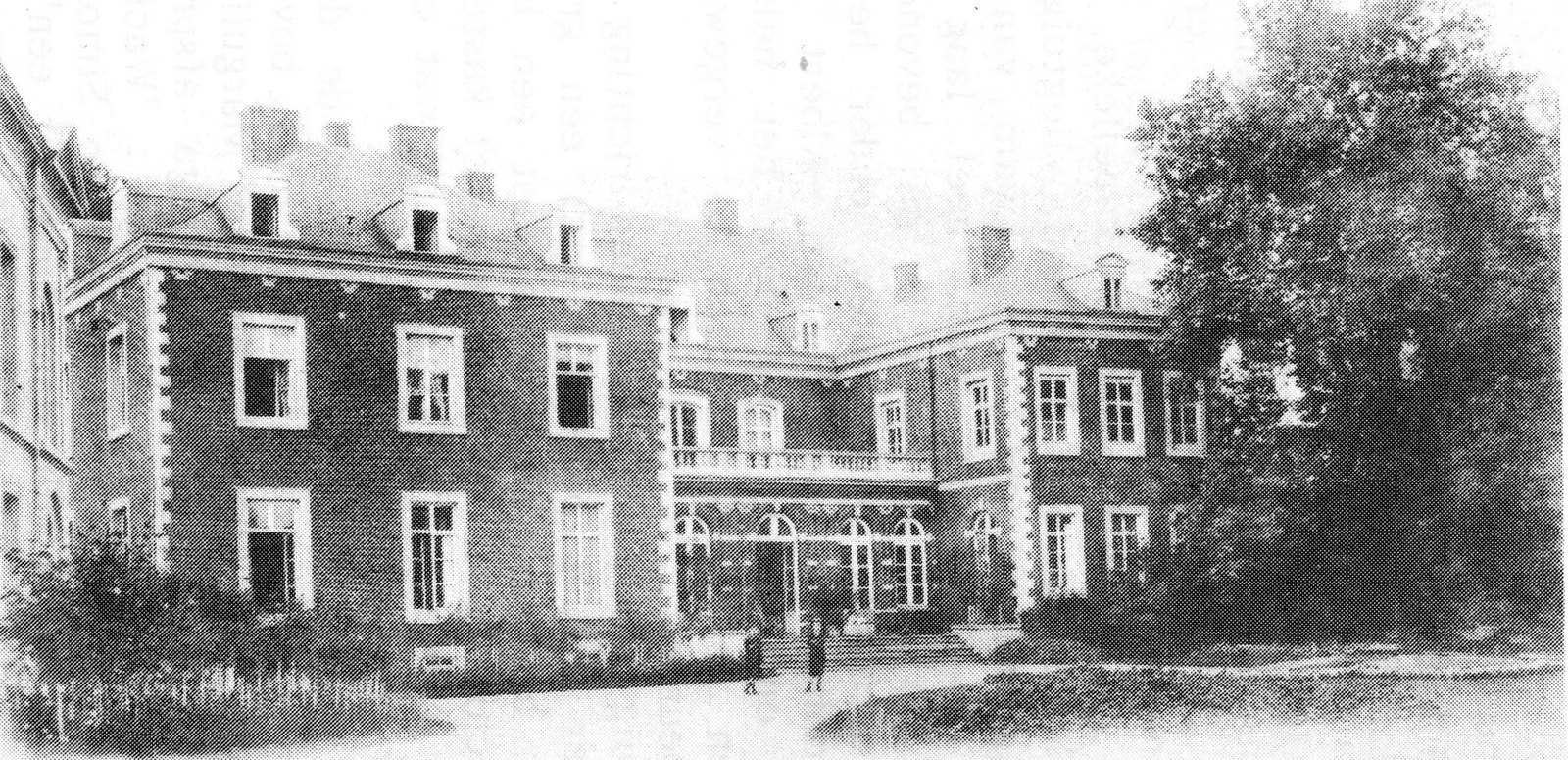
Baron Victor de Tornaco bought the castle of Voort — “Le Château de Voordt” — in 1868. From 1919–20 it was lived in by Baron Raymond de Tornaco. Around it lay the castle farm, a park, a pond and the wood over which the Lancaster turned that night.
The aircraft first hit the roof, then struck the ground immediately in front of the building. A ruptured fuel tank set everything alight; the castle burned out completely and was demolished later. Anyone visiting today stands in a landscape from which the building has vanished.
The people on the estate
Eugène Timmermans worked on the castle farm and saw the fireball come over the Molenberg. Seventeen-year-old Lucie Goignard helped at the farm. Farmhand Jean Warnots used a ladder to get the maids Eliza Ryckmans and Simonne Marguillier out of the roof gutter, where they stood ready to jump. Albert Buttiens, hiding on the estate to avoid forced labour, helped fight the fire — as did the baron himself.
“The research began in 1983 at the site of the crash, beside a piece of engine and the propeller.”
Molenberg, Broekom and Widooie
The stories of that night are scattered across a few square kilometres of Haspengouw: the meadow on the Molenberg at Broekom where pilot Johnson was found, the fields near Bommershoven where rear gunner Billows came down, the tarred road between Heers and Horpmaal where Williams landed, and farmer Paulissen's gate at Widooie where the navigator knocked at five in the morning.
Sources and links
- Wikipedia — Voort (Borgloon)
The village where the castle stood.
- Wikipedia — Borgloon
Loon, where Pepper was honoured in 1983.
- CWGC — Heverlee War Cemetery
The final resting place of pilot Albert Andrew Johnson.
Atmospheric illustration, not a historical photograph.